|
Windmill Types
There are three main designs of windmill in the British Isles, post mill, smock mill and tower mill.
|
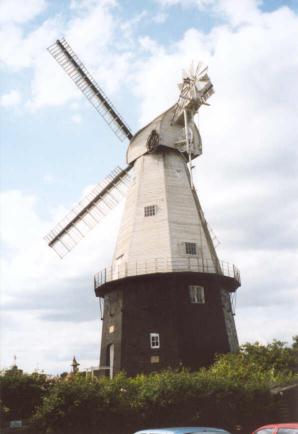
| In a SMOCK MILL, of which Cranbrook Union Mill is a fine example, the main body of the mill remains static and only the cap rotates with the sails. The lower half of the body is constructed of brick and the upper half of stout timber framing clad in lapped wooden boards, known as weatherboards. Because the mill was so much higher and the sails further from the ground to catch more wind, staging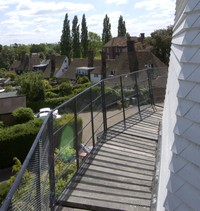
had to be constructed to enable the miller to gain access to the sails.
Most of the surviving windmills in Kent are of this type. Pictures of these can be found on the Links page. |
|
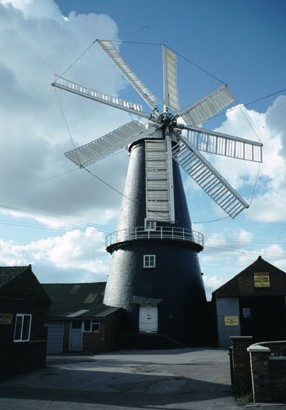
The TOWER MILL is a logical development of the smock mill, with the entire body of the mill built in brick; also preferred in less wooded areas of the country where suitable timber was more expensive. This was probably more expensive to build initially but stronger and easier to maintain. Because they also survived longer, there are many examples of tower mills to be found in the British Isles. The tallest is at Moulton (100ft) near Spalding in Llincolnshire, and the picture is of the unusual mill at Heckington in Lincolnshire with eight sails instead of the usual four.
| 
|
|
Glossary of Windmill Terms
|
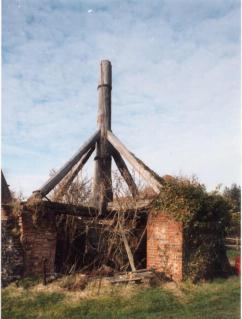
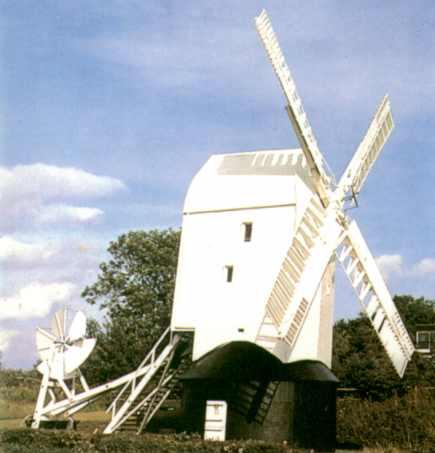 The POST MILL is the earliest type of windmill, having been introduced soon after the Norman conquest. In these mills, the whole body containing the grinding machinery and grain storage was supported on a large central